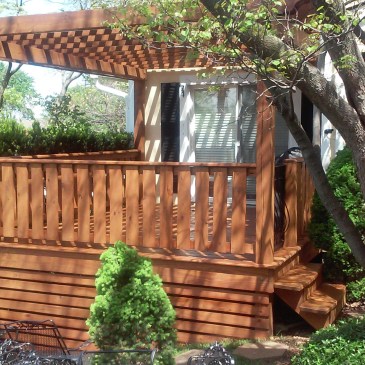
Job preparation is more than just a pressure washer and soap. In fact, proper job preparation is critical for professional end results.
OUR RESTORATION PROCESS
After many years in the wood restoration and preservation field, we have developed a unique process that provides outstanding results. Keeping up on the latest techniques and products available on the market is an important aspect of providing you with outstanding service and a quality job. We also re-manufacture our very own specially formulated cleaning and finish removal products enabling us to better suit the product to the job at hand.
Step One: Evaluating Your Wood
The first step in restoring your deck, or other wood structure is the evaluation process.
It’s with this that we are able to determine exactly what your project needs in order to restore the natural beauty back to it. During this process we provide consultation, obtain dimensions, and record the overall condition and finishes presently applied. We also bring before and after photographs of previous projects we have completed, samples of our preservatives, and your written, guaranteed price.
Step Two: Restoring Your Wood
Depending on the present condition of your wood structure, this step will consist of finish removal and/or a deep cleaning of the wood. If a recent finish has been applied (usually less than 2 years old) your wood may have to be stripped of the prior coating. Some coatings remove quite easily while others may require multiple steps for removal. If a finish does not exist on your wood, a deep cleaning is initiated in order to remove the mold, mildew, dirt, and general fallout that collects on the surface. The graying is also removed during this process to reveal the natural look of the wood.
Step Three: Brightening and Neutralizing Your Wood
One of the most important steps of the entire process is the neutralization of the cleaners or stripping agents previously applied. This provides a neutral pH for the wood as well as removes stubborn tannin staining (Naturally occurring dark stains in the wood). This is accomplished through the use of our specially blended brightening agents. After application and a short dwell period, a final through rinse of the structure is completed.
Step Four: Drying Out Your Wood
After all of the cleaning and restoration portion of your project is completed your wood needs to dry out. This process can vary depending on the season and overall weather conditions. Typically we require two to three dry days before preserving process begins. The moisture content should be no more than twelve percent when preserving and will be confirmed before the next step.
Step Five: Detail Work
A crucial step before the preservative application is in the detail work.
The pressure washing and chemical process can lead to some “furring” or raised grain of the wood. This furring will be removed not with sandpaper (sanding before preserving is NOT recommended!) but with our specially designed de-felting pads. Nail heads are also fixed and joints may be tightened.
Step Six: Preserving Your Wood
The final step and most gratifying is the preserving, or “staining, or sealing” of your wood. Every wood project differs in the amount of preservative needed for proper protection. This is determined by the past maintenance, species, and age of the deck. In short, we will apply as much preservative as the wood will absorb. Proper preparation and application is the key to product longevity.
*NEW WOOD*: The reason customers are told to wait an extended period of time before preserving their decks is because of a condition called “Mill Glaze.”
WHAT IS MILL GLAZE?
Mill glaze is a term used by the coatings industry to define the smooth glossy-like surface that develops on newly milled lumber. This glossy surface or “mill glaze” is caused by planers and saw blades turning at extremely high speeds. The high temperature created from this friction draws water soluble resins to the surface; the turning motion of the blades literally polishes the wood to a glaze-like condition. It is these glossy (glaze-like) areas that prevent proper coating penetration and adhesion resulting in premature peeling and failure.
The use of sodium hydroxide, followed by a strong acid bath during the cleaning process, will allow for immediate coating application. Industry standards have traditionally recommended allowing new wood to weather for an extended period of time. This weathering process solved the problem of mill glaze through UV exposure from the sun. However, general use (of the wood structure) and UV exposure can cause wood deterioration thus requiring restoration and/or repair.
 Scott's Restoration